
Recipe
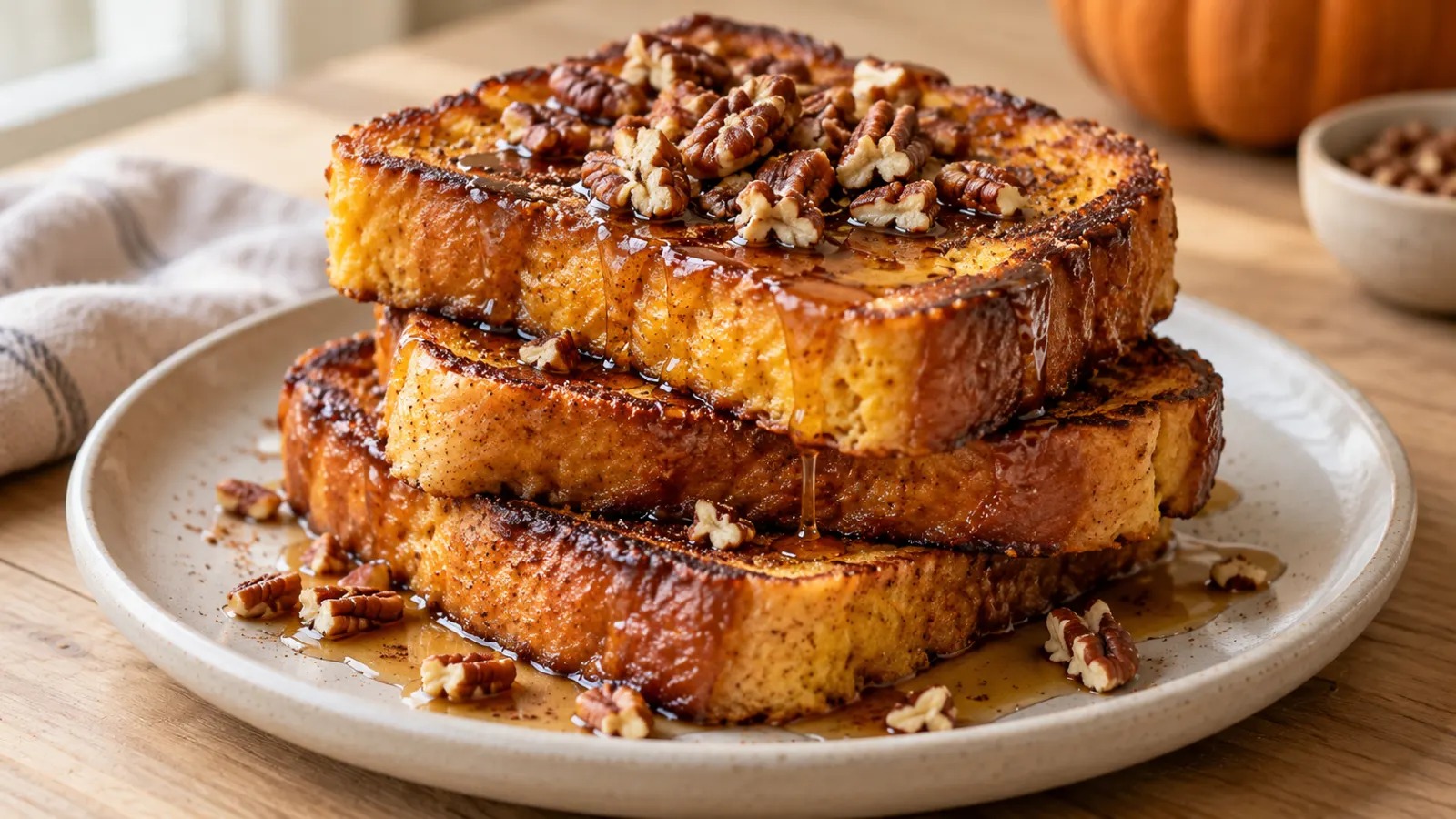
Pumpkin Pie French Toast: Leftover Pie Spice Meets Saturday Morning
Thanksgiving leaves two things behind every year: a fridge full of turkey and a can of pumpkin puree with exactly one cup gone. This French toast is...
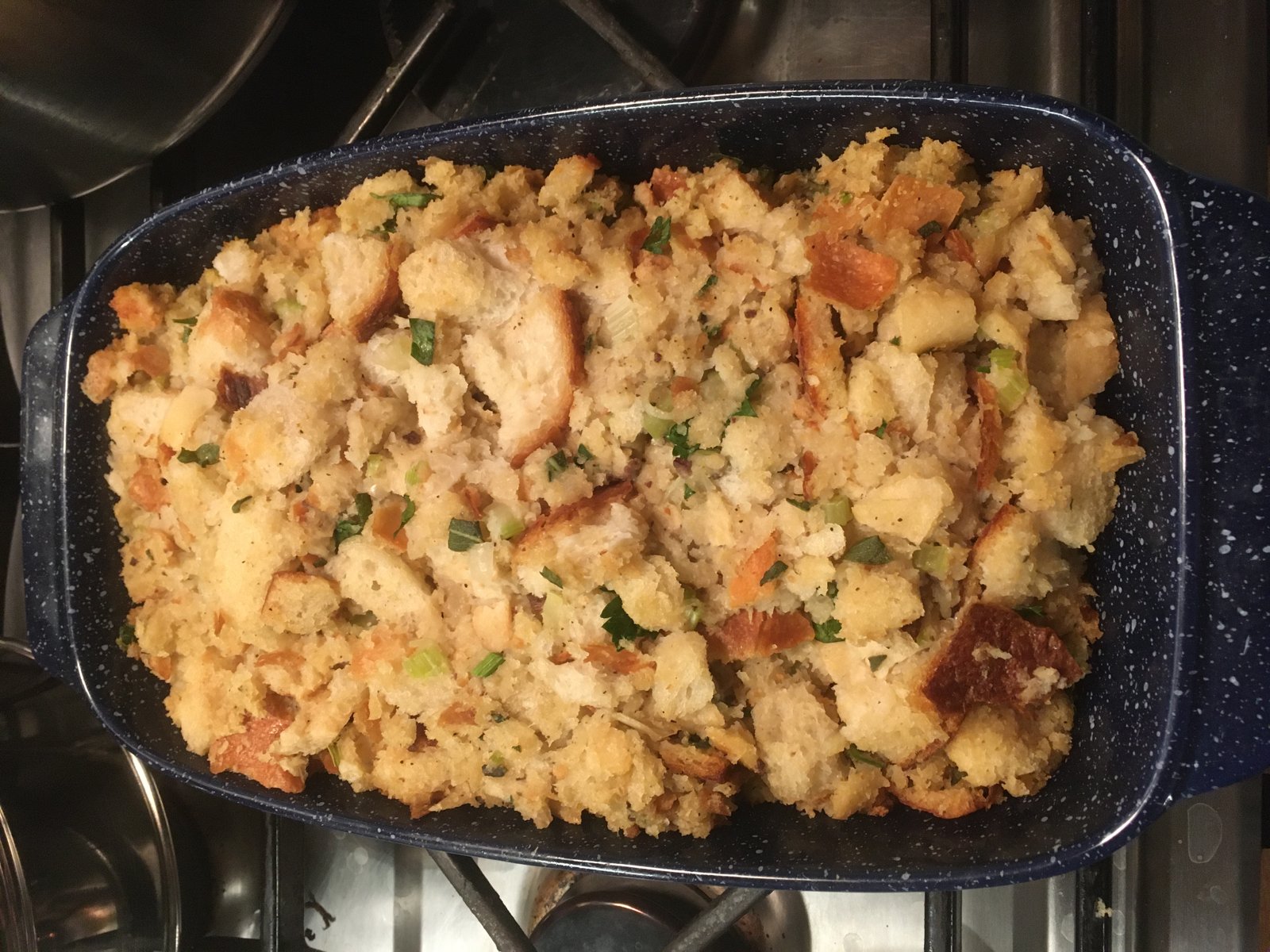
Turkey gets the photo. Stuffing gets eaten. Every Thanksgiving the bird sits in the middle of the table like a headliner who showed up for the poster, and the stuffing dish goes back to the kitchen scraped clean. Bread, butter, celery, onion, and sage don't look like much on paper. Baked together in one dish, they beat half the menu without breaking a sweat.
The whole game here is texture. The top has to go crisp and golden at the edges, and the middle has to stay soft and wet enough to scoop like a pillow. You get there two ways. The bread gets dried before it meets any stock, so it drinks the stock up instead of falling apart. The stock goes in in two pours, with a rest in between, so you can stop the second the bread feels heavy and soaked without a puddle sitting in the bottom of the bowl.
Thanksgiving is tomorrow, so this one is timed for real life. Dry the bread tonight and the dish takes about an hour of oven time tomorrow, most of it hands off while the rest of the meal does its thing. It bakes in its own dish next to everything else, it travels fine if you're on side dish duty, and it reheats on Friday like it was made that morning. Cooked is cooked, and a crisp corner piece with gravy poured over the top makes a strong case that stuffing should be the headliner.
Dry the bread. Heat the oven to 300°F. Spread the bread pieces on two sheet pans in loose layers and bake them for 20 to 25 minutes, stirring once halfway, until they feel dry all the way through and the edges pick up a little color. Let them cool on the pans. If you're working ahead, you can do this tonight and leave the pans on the counter overnight.
Set up the dish. Turn the oven up to 375°F. Butter a 9x13 inch baking dish, getting the corners and the sides, and set it near the stove.
Cook the onion and celery. Melt the butter in a large skillet over medium heat. Add the onion and the celery and cook them for 8 to 10 minutes, stirring now and then, until they go soft and sweet and the onion turns clear at the edges. Don't rush this part, because soft vegetables blend into the bread and crunchy ones stick out in a bad way.
Wake up the herbs. Stir the sage, the thyme, the salt, and the black pepper into the skillet and cook for 1 minute, until the herbs smell like a holiday kitchen. Pull the skillet off the heat.
Toss the bread. Tip the dried bread pieces into the biggest bowl you own. Scrape the onion and celery mix and every drop of the butter over the bread, add the chopped parsley, and toss it all with your hands or a big spoon until the bread looks evenly coated.
Add the stock in two pours. Whisk the beaten eggs into the warm stock. Pour about 2 cups of the mix over the bread and toss it well, then let the bowl sit for 5 minutes so the bread drinks it in. Toss again and add the rest a splash at a time only if the bread still feels dry. The bread should feel wet and heavy, with no puddle left in the bottom of the bowl.
Fill the dish loose. Spoon the stuffing into the buttered dish in an even layer and keep it loose. Don't pack it down, because a packed dish bakes up dense and a loose one keeps the soft middle and the crisp top you're after.
Bake it covered first. Cover the dish tight with foil and bake for 25 minutes, until the stuffing steams and sets through the middle.
Bake it uncovered for the crust. Take the foil off and bake for 15 to 20 minutes more, until the top is deep golden, the corner pieces look crisp, and the center is hot all the way through. A thermometer pushed into the middle should read 165°F.
Rest and serve it from the dish. Let the dish rest for 10 minutes so the scoops hold together, scatter a little extra chopped parsley over the top, and bring the whole dish to the table hot.
Dry bread is the whole trick, so don't skip it and don't fake it. Fresh bread soaked in stock turns to mush in the oven. Dried bread holds its shape, drinks the stock and the butter, and still gives you those crisp torn edges on top. If the top browns faster than the middle sets, lay the foil back over it loose for the last few minutes and let the center catch up.
Thanksgiving leaves two things behind every year: a fridge full of turkey and a can of pumpkin puree with exactly one cup gone. This French toast is...
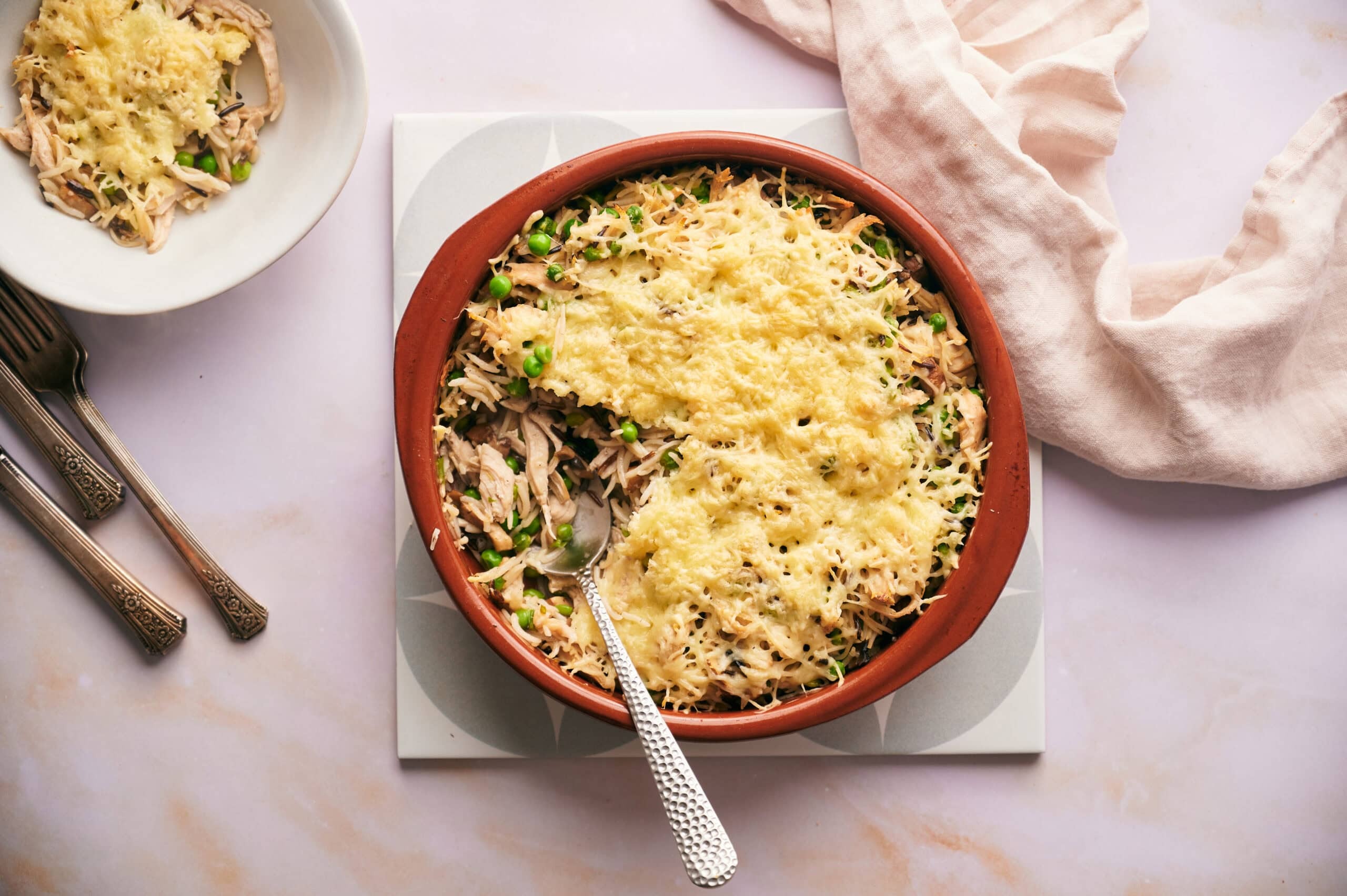
The turkey was the main event yesterday. Today it has a second job. Shredded up and folded into wild rice with mushrooms and a light cream sauce, the...
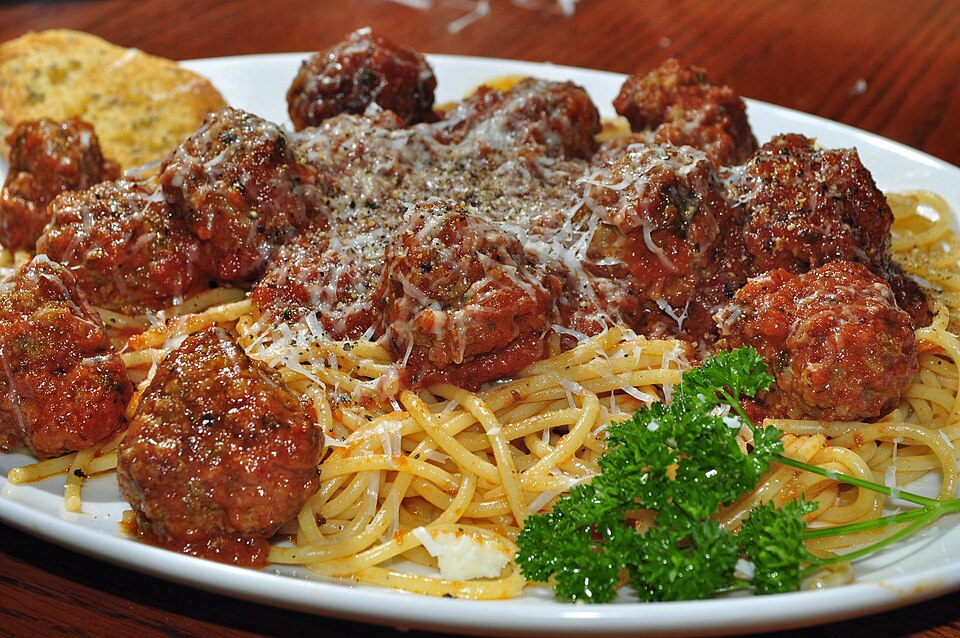
Some dinners whisper. This one walks in loud. A platter of spaghetti buried under a dozen big meatballs, red sauce on everything, Parmesan snowed...